How to Promote Your Research Paper: A 30-Day Plan
A dated plan for the month around your paper's publication, from the embargo check after acceptance to the attention signals you review on day 30. Each step says what to prepare, where to share it and which source backs it up.
The acceptance email arrives, you forward it to your co-authors, and the paper disappears into production for a few weeks. When it finally goes online, it is tempting to post one link, collect a handful of likes and move on to the next deadline.
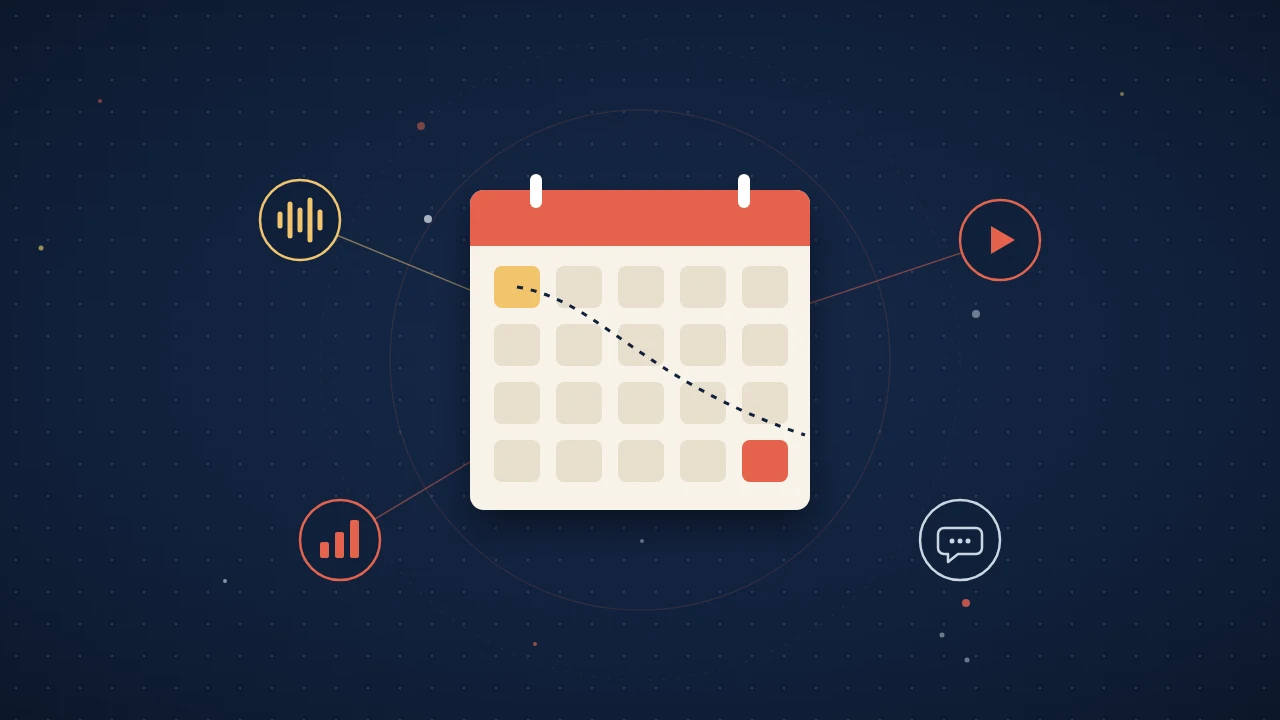
One post is not a plan. Here is a dated one that runs from acceptance to day 30, where day 0 is the day your paper goes online. Each step is small, and together they put the paper in front of the right people more than once.
Before Publication: Acceptance to Day 0
The quiet weeks before publication are the best time to prepare, because nothing is urgent yet.
1. Check the embargo
Your journal may hold the paper under a press embargo until a set time on publication day. At the time of writing (October 2026), PLOS ONE embargoes articles until 2 p.m. US Eastern Time on the publication date, and authors who talk to journalists before then must tell them about the embargo. Find your journal's press page and write down the exact date and time.
2. Ask the press office early
Email your university's communications team as soon as you have a date. Wiley's author guidance suggests partnering with them on a press release, and PLOS ONE asks authors to notify its media team when their institution is promoting the work. Send the date, a two-sentence summary and who can do interviews. Failing that, ask for a spot in a university blog or newsletter, which Wiley also suggests.
3. Line up your co-authors
Agree in one short email on the launch date, the DOI link everyone will use, the one visual everyone will post, and who covers which platform. Wiley recommends tagging co-authors, your institution and your lab, so collect everyone's handles now.
4. Write a plain language summary
Write three to five sentences a smart person outside your field can follow: why you did it, what you found, what it means. That paragraph becomes your press pitch, launch post, lab page text and conference slide. This guide to writing a plain language summary walks through it with an example.
5. Prepare your visuals
Pick the figure that carries the main finding and redraw it so it reads on a phone: bigger labels, one message, no panel letters. Wiley also suggests a short video explaining why the work matters, for social media. If you are choosing formats, here is how a video abstract, a graphical abstract and an audio summary compare.
6. Work out which version you can share
If the paper is not open access, check the rules. At the time of writing (October 2026), Taylor & Francis lets authors share their original submitted manuscript anywhere and post the accepted manuscript on a personal website after publication, with repository embargoes usually of 12 months (science, technology and medicine) or 18 months (social sciences and humanities). It also gives each author 50 free eprint links. Other publishers differ, so look your journal up in Jisc's Open Policy Finder, which replaced Sherpa Romeo and shows which version you can share, where, and after what embargo.
Day 0: Launch Day
Day 0 is the day the paper goes online and any embargo lifts. Block two hours for it.
- Update your lab page and faculty profile with the title, your summary, the visual and the DOI link.
- Post on LinkedIn, X or Bluesky, wherever your field actually talks, with the visual attached. Lead with the finding, not the title.
- Use the DOI link (Taylor & Francis recommends it whenever you share any version) and tag co-authors and your institution.
- Email co-authors that it is live. Then, as Wiley suggests, send a personal note with the link to colleagues and collaborators: the 10 to 20 people most likely to care. If the paper is paywalled, use your free eprint links here.
Days 1 to 14: Find the Rooms Where Your Readers Are
The launch post reaches people who already follow you. The next two weeks are for people who don't.
- List three to five places where your subfield actually reads: a society mailing list, a field newsletter, a subreddit, a Slack or Discord group, your department's newsletter.
- Read each community's self-promotion rules before you post, and follow them exactly. If unsure, ask a moderator first.
- Write each post for that room: a methods community wants the method, a practitioner newsletter wants what changes in practice.
- Reply to every comment within a day; the questions show which part of your summary is unclear.
- Keep a simple log of where you posted, when, and what happened.
Days 15 to 30: A Second Angle and the Signals
Use the paper in talks
Wiley suggests presenting at conferences or webinars. Closer to home, offer a 10-minute slot at a lab meeting or journal club in a neighbouring department, with a QR code to the paper on your last slide.
Post a follow-up with a different angle
Share the method behind the result, a limitation you are now working on, a figure that did not make the abstract, or your answer to the best question from week one.
Check attention signals
At the time of writing (October 2026), Altmetric lists the sources it tracks, including news outlets, policy documents, blogs, Wikipedia, X, Bluesky, YouTube, Reddit and podcasts. Wiley also points authors to its Author Dashboard for citations and downloads. Read these as a map of where conversation happened, not a verdict on the work.
Write down what worked
On day 30, write three lines: what you did, what got a response, and what you would change. It saves time on the next paper and feeds your next grant report.
Where Amplify Fits
The slowest part of this plan is not the posting. It is making the materials, all ready before day 0.
Amplify makes them from one paper. Upload the PDF in the weeks after acceptance so that on day 0 you have a video abstract (16:9, about 3 minutes), a vertical short (9:16, 45 to 60 seconds) for LinkedIn, Instagram, YouTube Shorts or a conference screen, an audio brief in English with 21 more languages on request, and a one-page, print-ready infographic. All of it comes from your PDF and nothing else, and every piece carries the title, the authors and a link to the paper of record.
Each format arrives as three variants you can edit line by line. A person reviews every format before release, and nothing publishes until you approve it, so you control the timing around any embargo.
For your lab page there is a widget: one script tag per page, one marker per paper, and readers can read, listen and ask questions without leaving your site. The analytics show reads, listens, questions asked, languages, and which format moved people, which answers the day 30 question and helps with grant reports.
Start on Acceptance Day
A paper does not need to go viral to do its job. It needs to reach the people who can use it, cite it or build on it, and that takes a month of steady effort rather than one busy afternoon. Start the day the acceptance email arrives.
Quick answers
When should I start promoting my research paper?
Start the day the acceptance email arrives, not the day the paper goes online. The quiet weeks before publication are the best time to prepare: check any press embargo, email your university's communications team, agree a launch plan with your co-authors, write a plain language summary and redraw your key figure so it reads on a phone.
What should I post on the day my paper is published?
Lead with the finding, not the title, and attach your visual. On launch day, block two hours to update your lab page and faculty profile, post wherever your field actually talks, use the DOI link and tag co-authors and your institution. Then, as Wiley suggests, send a personal note with the link to colleagues and collaborators, the 10 to 20 people most likely to care.
Can I share my paper if it is not open access?
It depends on the publisher, so check which version you may share and where. At the time of writing (October 2026), Taylor & Francis lets authors share their original submitted manuscript anywhere and post the accepted manuscript on a personal website after publication, and gives each author 50 free eprint links. For other journals, look them up in Jisc's Open Policy Finder, which replaced Sherpa Romeo.
How can I tell if anyone noticed my published paper?
Check attention signals around day 30, and read them as a map of where conversation happened, not a verdict on the work. At the time of writing (October 2026), Altmetric lists the sources it tracks, including news outlets, policy documents, blogs, Wikipedia, X, Bluesky, YouTube, Reddit and podcasts. Wiley also points authors to its Author Dashboard for citations and downloads.