
A Research Dissemination Plan Template You Can Fill In Today
A fill-in research dissemination plan template built from what funders actually ask, with seven columns and a worked example for one paper. It also covers indicators you can report on later without inventing numbers.
The grant form has a box called "Dissemination plan" and a word limit. You have written the research aims, the methods and the budget. Now you need to say, convincingly, how anyone outside your field will hear about the results.
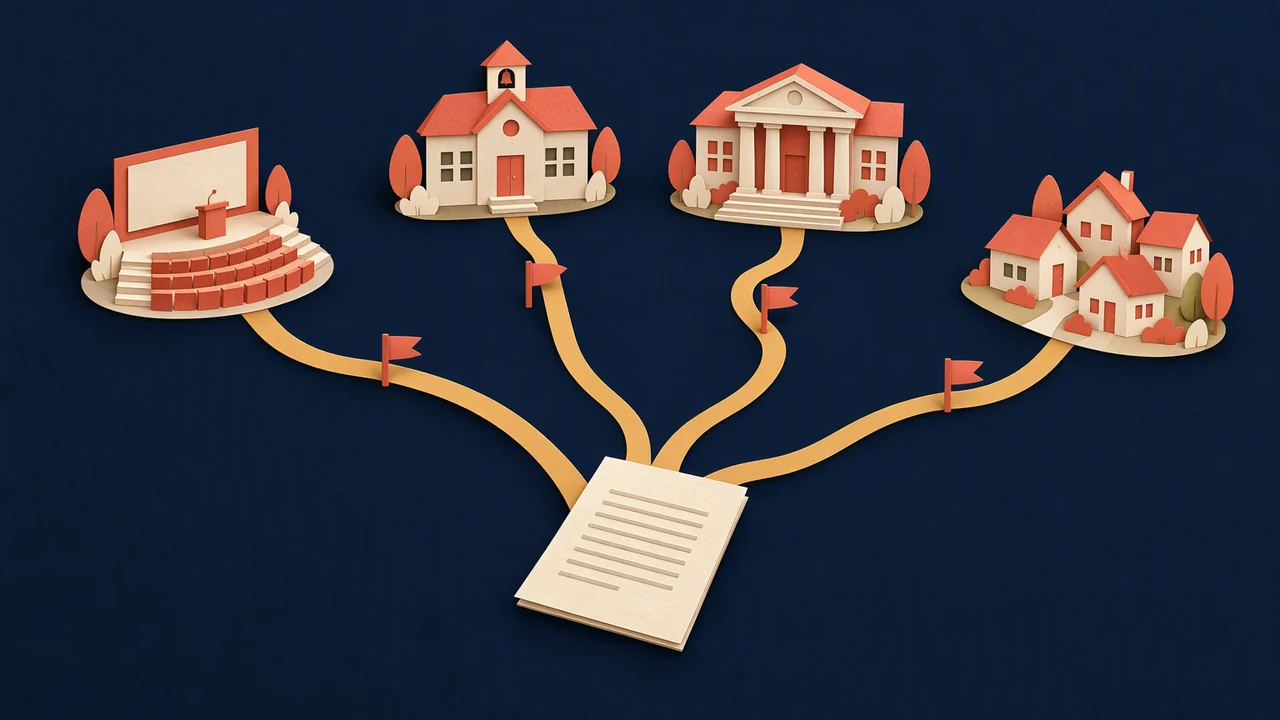
A common weak spot is a plan that is only a list of channels ("journal article, conference, Twitter, website") with no audience, no owner and no way to tell whether it worked. The template below fixes that in seven columns.
What Funders Are Actually Asking
Funders phrase it differently, but they ask the same few questions.
SSHRC's guidelines for effective knowledge mobilization ask applicants to address who stands to benefit from the research, which audiences will be involved and when, how they will benefit, and the best way to communicate with them. It asks those questions even when the audience is strictly academic.
The NSF's page on broader impacts says reviewers ask whether the plan is well reasoned and organized, and whether it incorporates a mechanism to assess success.
For Horizon Europe projects, the European Research Executive Agency's page on dissemination and exploitation says beneficiaries have a legal obligation to carry out activities that increase the impact of project results. It defines dissemination as sharing results with the people who can best use them: the scientific community, industry, commercial players, civil society and policymakers. Communication, making the project and its results visible, is a separate requirement of the grant agreement.
Put together: audience, benefit, format, timing and a way to measure. That is the template.
The Research Dissemination Plan Template
Copy this table into your proposal or project document and fill in one row per audience.
| Audience | What they need from the research | Format | Channel | Owner | When | Indicator |
|---|---|---|---|---|---|---|
| Who, specifically | The one thing that is useful to them | Article, brief, video, talk, infographic | Where they already are | A named person | Month or project stage | Something you can count or record |
How to fill each column
- Audience: be specific. "Policymakers" is too broad; "staff in a provincial education ministry who design reading programs" gives you a channel and a format.
- What they need: one sentence. Peers need methods and effect sizes; practitioners need what to do differently; the public needs why it matters.
- Format: match it to the audience, not to habit. SSHRC lists options from refereed articles, data repositories and reports to websites, films, videos, exhibits, op-eds and social media.
- Channel: where this audience already reads, listens or meets.
- Owner: one name per row. SSHRC notes that larger projects typically employ a project co-ordinator, and that knowledge brokers can be effective.
- When: tie it to a project stage. SSHRC's best practices say meetings with knowledge users are especially effective at the outset of a project.
- Indicator: decide it now. SSHRC advises developing indicators at the outset and gives examples: citation indicators, the number of newsletter or blog subscribers, and the number of recommendations to policymakers that were adopted.
A Worked Example for One Paper
Say you have a social science paper evaluating a school-based reading program, with findings that matter to teachers, school boards and other researchers. A filled-in plan might look like this.
| Audience | What they need | Format | Channel | Owner | When | Indicator |
|---|---|---|---|---|---|---|
| Education researchers | Design, measures and results in full | Journal article and conference talk | Target journal; field conference | PI | Publication and next conference | Citations; questions after the talk |
| Classroom teachers | What the program involves and what changed | Two-minute video and one-page summary | Teacher association newsletter; lab website | Postdoc | Month 1 after publication | Views; newsletter clicks |
| School board staff | Cost, effort and fit for their district | Two-page brief and a meeting | Direct email; briefing meeting | PI with partner board | Months 1 to 3 | Meetings held; follow-up requests |
| Parents and the public | Why reading programs matter, in plain language | Audio summary and short social post | Lab website; LinkedIn; local media | Communications office | Month 1 | Listens; media mentions |
Notice what the example does. Each row has a different format, because SSHRC's best practices observe that successful projects often adopt more than one outreach medium. Every indicator is something the team can collect without a survey firm.
If you need to report these results later, our guide to turning reach into grant report evidence shows how to write it up, and our post on a knowledge mobilization plan that shows reach goes deeper on SSHRC and CIHR expectations.
Outputs, Outcomes and Impacts
Reviewers notice when a plan confuses these. SSHRC separates them clearly: outputs are short-term results such as publications, presentations and event attendees; outcomes include activities undertaken as a result of new insights, such as the number of people in target audiences who use the findings; impacts are long-term effects in the form of changed thinking and behaviour.
Your indicator column mostly tracks outputs and early outcomes. That is fine. Say so, and describe the longer-term impact you hope for in prose, without promising numbers you cannot collect.
Where Amplify Fits
The hardest rows in any plan are the non-specialist ones: a format the public, practitioners or policy staff will open, and an indicator you can actually count.
Amplify covers several of those rows from one paper. From the PDF you upload, it makes a video abstract of about three minutes, a vertical short for LinkedIn, Instagram or YouTube Shorts, an audio brief in English, plus 21 more languages on request, and a one-page print-ready infographic. A person reviews every format, and nothing publishes until you approve it.
The embeddable widget puts all of it beside the paper on your lab site or faculty profile. Its analytics record reads, listens, questions asked, languages and which format moved people, which gives the indicator column real numbers for grant reports and broader-impact sections.
A Plan Someone Can Follow
A good dissemination plan is one a new team member could pick up and act on: a named audience, a reason they care, a format, an owner, a date and a measure. Fill in the template once per project, and the box on the grant form stops being the hardest part.
Quick answers
What should a research dissemination plan include?
At minimum: who the audiences are, what each needs from the research, the format and channel you will use to reach them, who on the team does it, when, and how you will know it worked. That mirrors the questions SSHRC asks applicants about knowledge mobilization, and the NSF criterion asking whether a plan includes a mechanism to assess success.
What is the difference between dissemination and communication?
In Horizon Europe terms, dissemination means sharing research results with the people who can best make use of them, such as the scientific community, industry, civil society and policymakers. Communication is about making the project, its activities and its results visible. Both are requirements of the grant agreement, so a plan for an EU project should cover each.
What indicators can I use to measure research dissemination?
Pick indicators you can actually collect for each audience. SSHRC gives examples such as citation indicators, the number of newsletter or blog subscribers, and the number of recommendations to policymakers that were adopted. Define them at the start of the project, as SSHRC advises, so you know what to record while the work is happening rather than reconstructing it later.
Should I use more than one format to disseminate my research?
Usually yes. SSHRC lists best practices for knowledge mobilization, including that successful projects often adopt more than one outreach medium, and it names options from journal articles and policy papers to videos, websites and social media. Choose formats by audience: a policy brief for a ministry, a short video for the public, a talk for peers.