Kudos Alternatives for Researchers: Explain and Track Your Paper
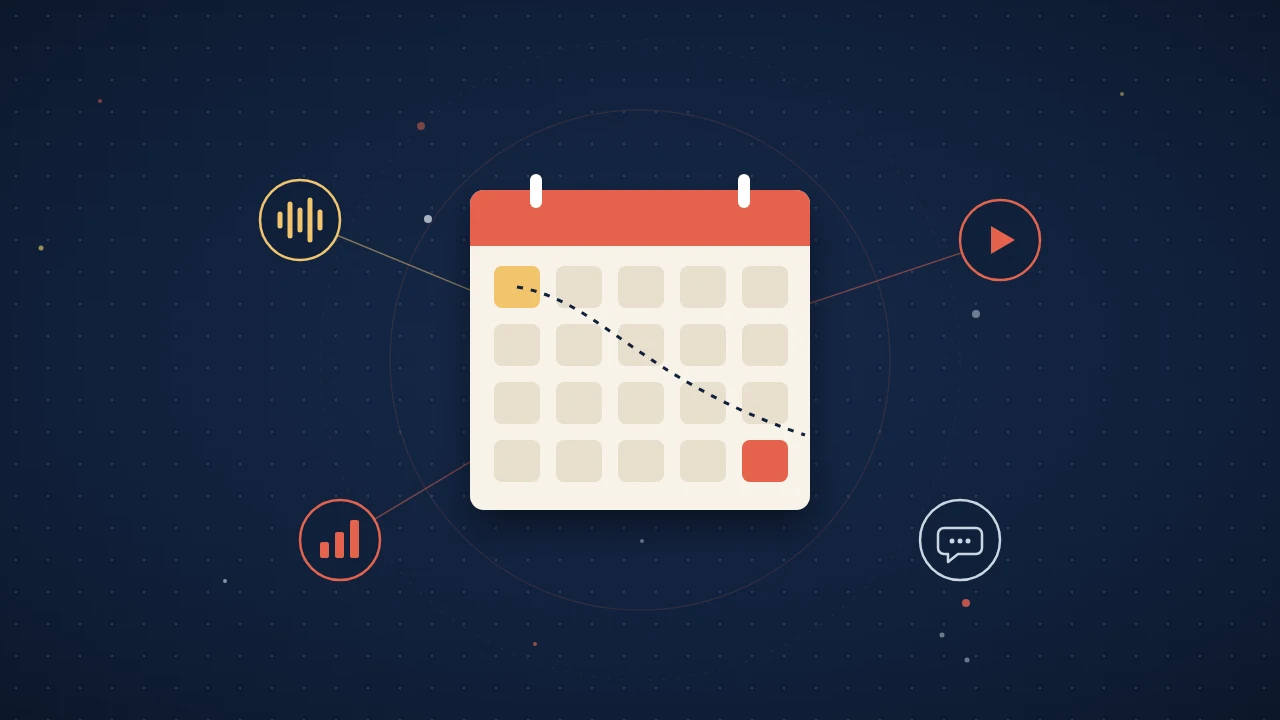
An honest comparison of Kudos alternatives for researchers who want to explain, share or track a paper, with what each option does, what it costs at the time of writing and when it fits. It also explains why review sites list HR software instead.
You wrote a plain-language explanation of your paper on Kudos and checked the views now and then. Then something changes: the Premium renewal comes up, a co-author asks for a video, or your department wants the explanation on the lab website instead of on another platform.
So you search for Kudos alternatives, and the first results are about employee rewards and peer recognition. You did not mistype anything. Here is why that happens, and an honest comparison of the options that actually help a researcher explain, share and track a paper, with prices from each provider's own page at the time of writing (October 2026).
First, a naming trap on review sites
The Kudos you find on software review sites is a different product. On G2, Kudos is employee recognition software, and the first alternatives it suggests are Achievers, Nectar, Motivosity, Bonusly and Awardco. Capterra files its Kudos under Employee Recognition Software, and AlternativeTo's Kudos page points to alternatives like RoMo, an employee recognition app for Slack and Microsoft Teams, and Workleap Officevibe.
None of these are research promotion tools. The Kudos researchers use lives at growkudos.com, so if you want a growkudos alternative, skip the review sites and compare tools by the job you need done: explaining the paper, showing it in another format, hosting it on your own page, or tracking attention.
What Kudos gives you, free and paid
It helps to know exactly what you would be replacing. Kudos describes its researcher offer as Stories, Showcases, Promotion and Results: a plain-language page for your paper, a showcase website for Premium users, promotion tools and metrics.
On the free plan, you get a basic page for each publication you claim, where you can add a plain language summary and choose a featured image from Kudos's stock selection. Basic metrics show your views in Kudos and the paper's Altmetric and citation counts.
Premium for one person costs £79 a year or £9.99 a month at the time of writing (October 2026). It adds a Personal Showcase, lets you use your own images and link to video, data, code and press coverage, and shows how many times the paper was shared, how many people clicked on those links, and through which channels. Kudos also lists a project plan at £249 a year (or £749 in perpetuity) and a group plan at £1,999 a year, plus a done-for-you publicity campaign for US$199 that promotes a Story page you have already written through its homepage, showcases, social media, email marketing and search engines.
That is a lot for a modest fee. Researchers still look for a Kudos research alternative, usually for one of these reasons:
- Budget: the renewal is small, but it is one more subscription to justify.
- Format: Premium lets you link to a video, but the pages above do not list making one for you.
- Home: the explanation lives on a Kudos page, and you want it on your own lab site or faculty profile.
- Tracking only: you want to see where a paper is discussed without maintaining another profile.
Kudos alternatives, by the job you need done
Track attention: Altmetric's free tools
Altmetric tracks mentions of research across sources including more than 4,000 mainstream media outlets, public policy documents, a curated list of over 9,000 blogs, 31 language versions of Wikipedia, patents, X, Bluesky, YouTube, Reddit and podcasts.
Two of its free tools are for individual researchers: a bookmarklet that shows a paper's online shares and mentions in one click, and badges you can embed on a personal website or online CV. The catch is that the bookmarklet needs an email address registered at your institution (Gmail and Yahoo addresses are not accepted), and it only works on PubMed, arXiv or pages with a DOI and Google Scholar-friendly citation metadata.
Fits when: you mainly want to know where your paper is being talked about.
Own your record: ORCID plus your lab or project page
ORCID gives researchers a unique, persistent identifier and a record they can create, edit and maintain free of charge, and connect to their affiliations and contributions. It is not a promotion tool, but it is the stable link between your name and your papers across institutions and years.
Pair it with a short plain-language explanation on your lab or project page and you have the core of a Kudos page, on a page you control. You write the summary yourself (our guide on how to write a plain language summary walks through it), and you can add a free Altmetric badge for tracking. If your publications page is a long list of citations, these fixes for a lab publications page help.
Fits when: you want the explanation where your own visitors already go.
Write for the public: The Conversation
The Conversation is a nonprofit news organization that publishes articles written by academic experts and edited by its journalists. Through a Creative Commons license, it distributes those articles at no charge to news organizations.
Its pitch page says writers must be scholars or researchers affiliated with a college, university or research institution, and PhD students can write about their research topic or share a byline with a faculty advisor. It publishes articles explaining new research for a non-expert audience, but not opinion or advocacy pieces, and only original material that was not written by generative AI. It accepts only a small fraction of pitches. The US edition generally works with academics at US universities, and there are editions in Africa, Australia, Brazil, Canada, France, Indonesia, New Zealand, Spain and the UK.
Neither page lists a fee: the cost is your time, and acceptance is not guaranteed.
Fits when: your paper connects to something people are already reading about, and you are happy to work with an editor.
Commission one short video: Springer Nature Video Byte
At the time of writing (October 2026), Springer Nature lists its Video Byte at $350.00: a 1-minute video with visuals, footage and music, scripted for a lay audience. It is delivered within 10 business days with one revision, hosted on YouTube and Vimeo, and may be featured on Springer Nature's social media channels.
Fits when: you want one short, professionally made video for a general audience on a modest budget.
Commission a package: Editage research communication services
At the time of writing (October 2026), on its research communication page with the American Psychological Association, Editage lists a plain-language summary at $200 (5 days), a research news story of 300 to 500 words at $600 (1 to 2 weeks), an infographic at $750 (1 to 2 weeks) and a 2-minute animated video summary at $1,500 (3 to 4 weeks), which comes with embed code for a lab, university or personal page. The pack that bundles all four is also listed at $1,500.
The ordering steps include a customized price quote after you upload the manuscript, so treat the listed prices as a starting point.
Fits when: you want writers and animators to do the work and you have a budget line for it.
Commission bespoke animation: Animate Your Science
At the time of writing (October 2026), Animate Your Science lists 90-second video abstracts from 3,690 USD in whiteboard style and from 5,130 USD in motion graphics. That includes voiceover and music, two rounds of revisions at each stage, English captions and open-access licensing. Production typically takes 3 to 4 weeks, assuming you return revisions and approvals within 48 hours.
Fits when: a flagship paper deserves a custom animation and the budget is approved.
Hear your paper explained: Gemini Notebook (formerly NotebookLM)
Google renamed NotebookLM to Gemini Notebook on July 16, 2026, and says it is "the same standalone product". You can sign up free of charge with a Gmail account, with paid tiers through Google AI plans.
Its Audio Overviews are discussions between AI hosts that summarize the sources you upload, in formats from a Deep Dive to The Brief (one speaker, under two minutes), and in 80+ languages. The same help page warns that they "may contain inaccuracies or audio glitches". Sharing by link means giving listeners access to the full notebook, and at the time of writing (October 2026) public notebook sharing is disabled for Workspace Enterprise and Education accounts. You can download the audio file instead.
Fits when: you want to hear your own paper explained back to you while you study it or prepare for questions. It is a study and research tool rather than a publishing one, so if you do share an overview, listen to all of it first.
Side by side
| Option | What it does | Cost at the time of writing (October 2026) | Fits when |
|---|---|---|---|
| Kudos, free plan | Plain language summary page, basic metrics including Altmetric and citation counts | Free | You want a simple explainer page and counts in one place |
| Kudos Premium (personal) | Showcase, your own images and links, share and click metrics by channel | £79 a year or £9.99 a month | You share actively and want to see which channel worked |
| Altmetric free tools | Bookmarklet and embeddable badges showing online attention | Free (bookmarklet needs an institutional email) | You only need tracking |
| ORCID plus your lab page | Persistent identifier and record, explanation on your own site | ORCID is free; the page depends on your institution | You want the explanation on a page you control |
| The Conversation | Edited explanatory article for the public, republished under Creative Commons | No fee listed; your time | Your work connects to the news and you have an academic affiliation |
| Springer Nature Video Byte | 1-minute video scripted for a lay audience | $350.00 | One short video, made for you |
| Editage (APA page) | Summary, news story, infographic, 2-minute video | $200 to $1,500 per item; all four for $1,500 | A done-for-you package with a budget |
| Animate Your Science | Bespoke 90-second animation | From 3,690 USD | A flagship paper and a custom look |
| Gemini Notebook | AI audio overviews of your sources | Free with a Gmail account; paid plans available | Studying your paper, not publishing it |
Where Amplify fits
If you are leaving Kudos because you want more formats, and you want them on your own page, that is the gap we built Amplify for. One order covers one paper: a video abstract (16:9, about 3 minutes), a vertical short (9:16, 45 to 60 seconds), an audio brief in English plus 21 more languages on request, and a one-page, print-ready infographic.
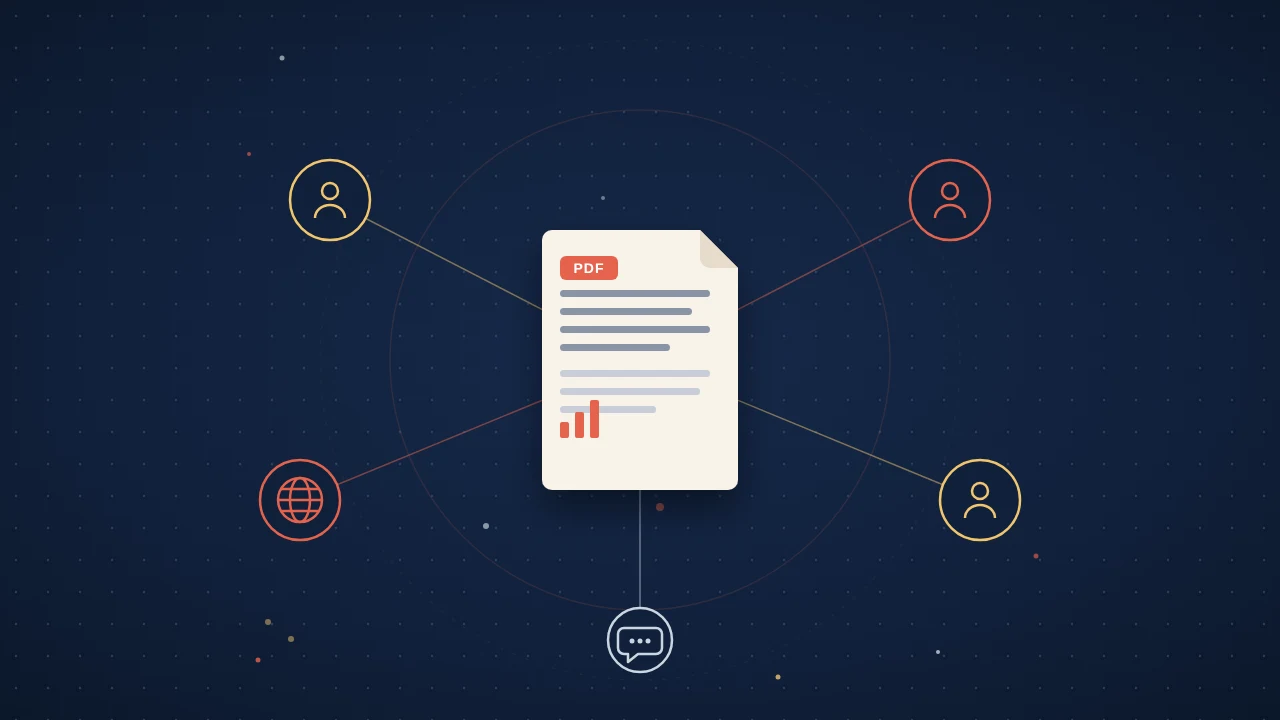
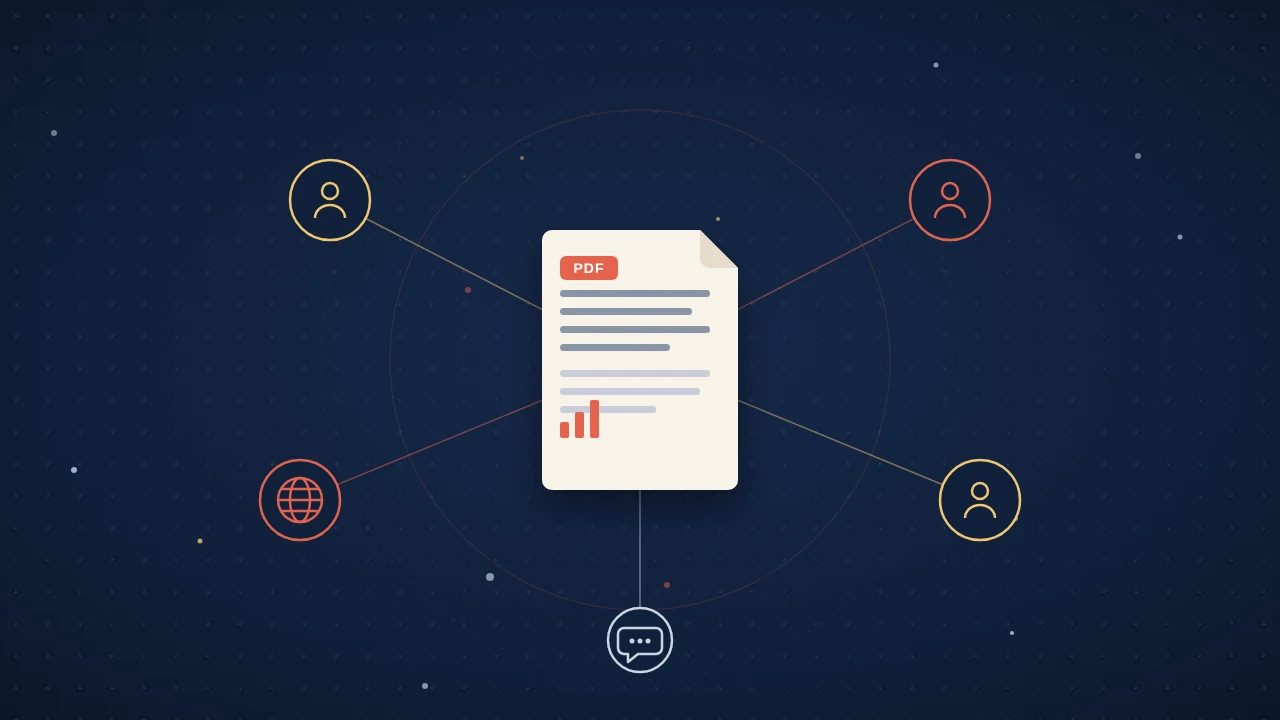
Everything is generated from the PDF you upload and nothing else, and every piece carries the title, the authors and a link back to the paper of record. Each format arrives as three variants you can edit line by line or regenerate. A person reviews every format before it is released, and nothing publishes until you approve it.
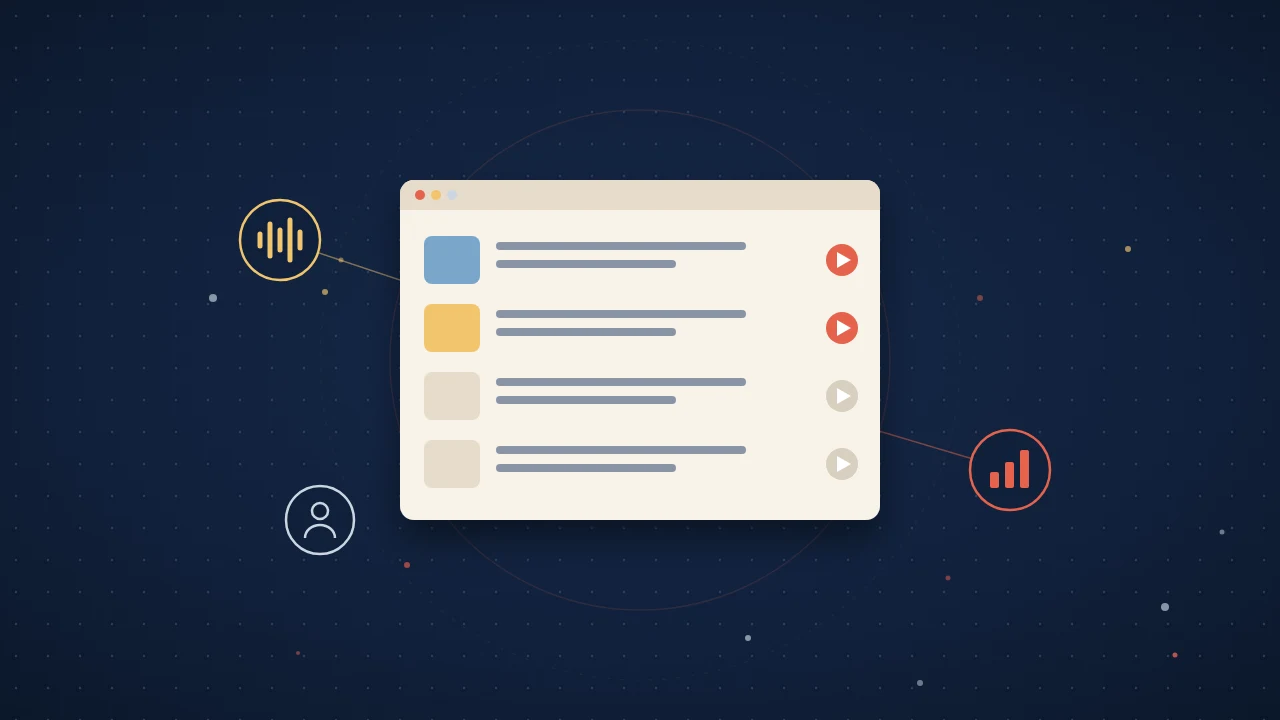
The part that overlaps with Kudos is the page and the numbers. An embeddable widget, one script tag per page, opens beside the paper on your faculty profile, lab site or publication list, so readers can read, listen and ask questions about the paper without leaving your page. Analytics show reads, listens, questions asked, languages and which format moved people, which is useful for grant reports and broader-impact sections. The widget and analytics are included in the per-paper price, with no subscription.
You keep ownership, we do not train on your work, and you can delete a paper and its artifacts at any time. Amplify does not replace an ORCID record, an Altmetric badge or an article you write yourself. If you plan to send the video to a journal, check the journal's specs and AI policy first, and ask the editor if unsure. Current pricing is on the Amplify page.
How to choose
Only want to know where your paper is being discussed? Start with Altmetric's free tools, and keep your free Kudos page if you already have one.
Want the explanation on your own site? Keep your ORCID record current and give the paper a proper entry on your lab page.
Want a professionally made video for one paper? Compare Springer Nature, Editage and Animate Your Science on length, revisions, turnaround and what you may reuse.
Want to reach the public in your own words? Pitch The Conversation, and expect to work with an editor.
No single tool covers every route to a reader, and that is fine. Pick the one or two that match the job this paper needs, keep the paper of record one click away from everything you make, and look again at what worked when the next paper comes out.
Quick answers
Why do searches for Kudos alternatives show employee recognition software?
Because the Kudos listed on G2, Capterra and AlternativeTo is a different product: employee recognition software, not the research communication platform at growkudos.com. G2's list of alternatives names employee recognition tools such as Achievers, Nectar, Motivosity, Bonusly and Awardco. For research promotion tools, compare options by the job you need done: explaining, showing, hosting or tracking a paper.
Is there a free alternative to Kudos Premium?
Yes, for parts of what it does. At the time of writing (October 2026), Kudos Premium costs £79 a year or £9.99 a month, while its free plan still gives you a plain language summary page and basic metrics. Altmetric's bookmarklet and badges are free, an ORCID record is free, and The Conversation's pages list no fee for writing, only your time.
Can I use NotebookLM audio overviews to promote my paper?
You can, but it is a study and research tool rather than a publishing one. NotebookLM was renamed Gemini Notebook in July 2026, and its help page warns that Audio Overviews may contain inaccuracies or audio glitches, so listen before sharing. Sharing by link gives listeners access to the full notebook, and at the time of writing (October 2026) public notebook sharing is disabled for Workspace Enterprise and Education accounts.
Is there a Kudos alternative that puts video and audio on my own website?
Amplify does this per paper. One order turns your PDF into a video abstract of about 3 minutes, a vertical short, an audio brief and a one-page infographic, with an embeddable widget for your lab site or faculty profile. Its analytics cover reads, listens, questions asked, languages and which format moved people, and there is no subscription.